First, What Exactly Is a Draw?
A draw means your hole cards plus the board are one card away from a made hand. Most of the time we're talking about straight draws and flush draws.
Why do draws exist in every pot? Because most players only enter with AA, KK, AK-type hands, and after the flop they're usually sitting on what we'll call the "big pair club" — overpairs, top pairs, maybe two pair or a set. Meanwhile, some players love hands like A♠T♠ or 9♠8♠ ("s" means suited), dreaming of flopping a flush or straight to crack those big pairs.
Here's the catch: flopping the actual flush or straight is extremely rare. Way more often, you flop a draw — a "one card short" hand. Then your opponent bets, and you have to decide: call or fold? Chase or give up? That's where real skill comes in.
Here's the one-line answer up front: chase at the cheapest price possible, chase only the nuts, and fold the moment the price is wrong. Now let's break it down.
Before You Play Another Draw, Memorize These 4 Rules
Rule 1: A draw is not a hand — don't overpay for it
Right now, your draw is nothing. When someone bets, your "flush draw" is really just two high cards. So principle number one: see the next card as cheaply as possible. Free card? Great. Expensive call? Get out of the way.
Rule 2: Your hit rate is lower than you think
A lot of players feel like "I'm on a flush draw, I'm basically a lock." The real number: a flush draw on the flop hits on the turn only 19.1% of the time — less than one in five. Full odds tables are coming below; read them once and you'll never play by feel again.
Rule 3: Price every chase with expected value
"I feel like it's coming" is not a reason. "The math says it's profitable" is. Are the pot odds there? Are the implied odds there (how much more can you win after you hit)? If you can't do the math on a draw, don't chase it.
Rule 4: Chase the nuts or don't chase at all
The goal of a draw is the nuts — when you hit, you have the best possible hand. If you're drawing to a baby straight or a small flush, you can hit your card and still run into a bigger straight or a bigger flush. Paying money, hitting your card, and losing your stack is the worst outcome in poker. If you're drawing to second-best, you're better off not drawing.
Quick note: everything here applies mainly to standard cash games. Tournaments and weird formats are a different conversation.
The Real Odds, in Three Tables
(The original article had these as images, now lost — the tables below are rebuilt with standard poker math.)
Table 1: How often you flop a draw
表格
| Your hand | Flop result | Probability |
|---|---|---|
| Suited hand (e.g., A♠T♠) | Flush draw | ~10.9% (about 1 in 9) |
| Suited hand | Flopped flush | ~0.84% |
| Connectors (e.g., 9♠8♠) | Open-ended straight draw | ~9.6% |
| Connectors | Flopped straight | ~1.3% See the problem? Directly flopping a made hand is around 1%. Nearly every time, what you're holding is a draw. That's why "how to play draws" matters a hundred times more than "how to play straights." |
Table 2: Flop draw → hitting on the turn
表格
| Draw type | Outs | Hits on turn |
|---|---|---|
| Flush draw | 9 | 19.1% |
| Open-ended straight draw | 8 | 17.0% |
| Gutshot | 4 | 8.5% |
Table 3: Flop draw → hitting by the river
表格
| Draw type | Outs | By turn | By river |
|---|---|---|---|
| Combo draw (flush + straight) | 15 | 31.9% | 54.1% |
| Flush draw | 9 | 19.1% | 35.0% |
| Open-ended straight draw | 8 | 17.0% | 31.5% |
| Gutshot | 4 | 8.5% | 16.5% Stare at that first row: a combo draw gets there 54% of the time by the river — against top pair, it's actually a slight favorite. That's why strong players attack with big draws instead of timidly calling. |
You Have a Draw. What Do You Check First? Always the Opponent.
Once you're on a draw, the decision order is: opponent first, then draw strength, then position, then stack sizes.
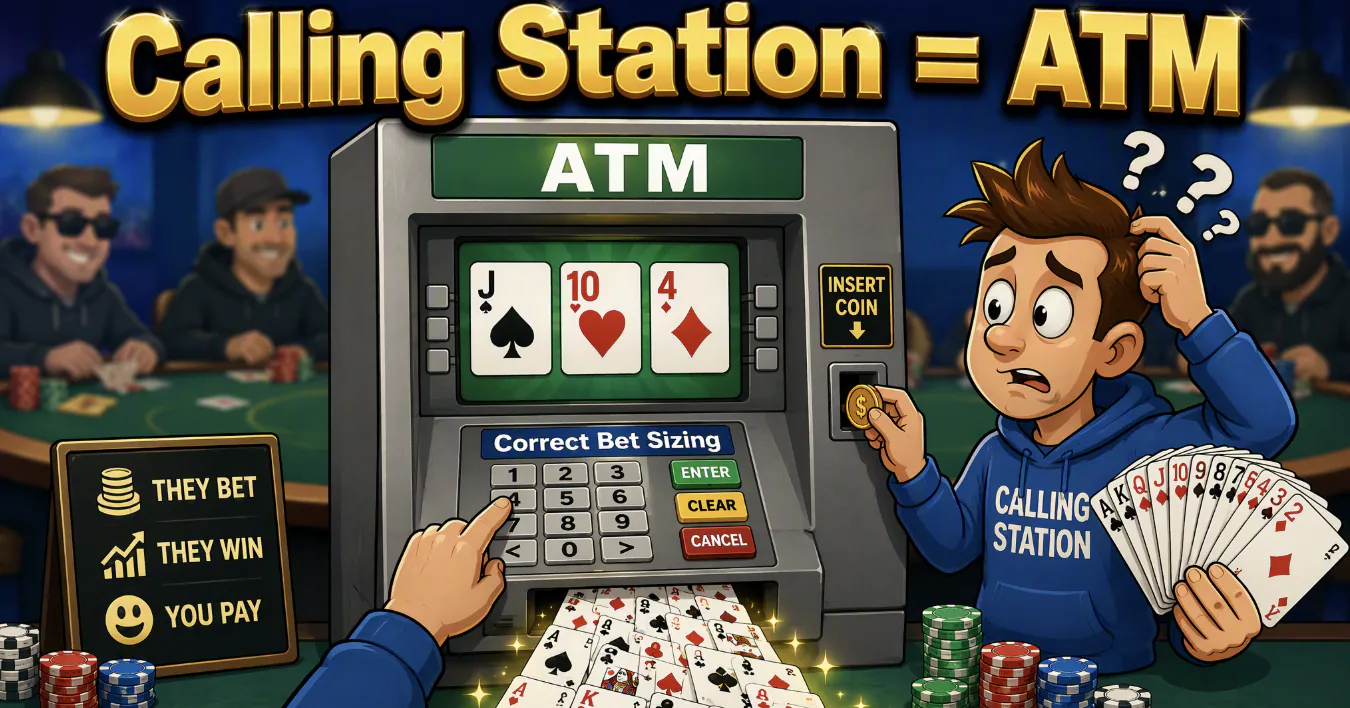
Why does the opponent come first? Because most of a draw's profit comes from "how much will they pay me after I hit." Up against a calling station who never folds anything? Your nut draw is a money printer. Up against a tight, scared player who folds to any pressure? You'll extract nothing when you hit — your best bet is a semi-bluff to take the pot down right now.
Same draw, different opponent, completely different play.
3 Spots Where You Should Dump Your Draw on the Flop
Spot 1: The price is wrong
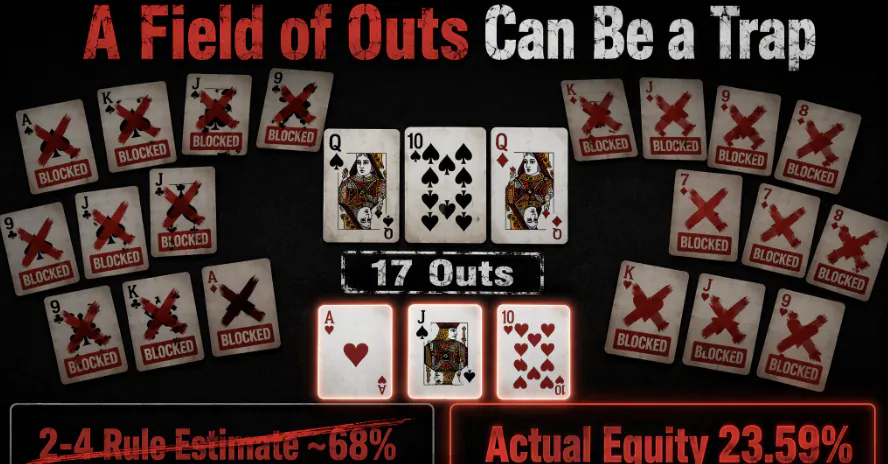
The outs you need might be sitting in someone else's hand — everyone loves suited hands, so when you're on a flush draw, other players' cards in your suit shrink your real outs. If even the on-paper odds (including implied odds) are barely okay, the real odds are worse. Don't hesitate. Fold.
Spot 2: Someone bets and a crowd calls
A whole table calling along tells you something: several players are probably drawing too. Your outs just got divided up, and your chances shrank. If the price isn't great on top of that, let it go.
Spot 3: You're not drawing to the nuts
Classic example: you hold 9♠7♠ on a Q♥J♦T♣ board. Looks like an open-ender, right? But if a K comes, anyone with an A makes a higher straight; if an 8 comes, you can still lose to K9 making the higher straight. A draw that can "hit and still lose" should be folded early.
The old saying nails it: "Don't chase straights on a flush board, don't chase flushes on a paired board." Same lesson — never pay to finish second.
What Draws Hunt: Every "Big Pair Club" Hand
So what do draws eat? They eat the entire big pair club — top pairs, overpairs, two pairs, sets.
Those hands look mighty, but their weakness is glaring:
- When ahead, they're not ahead by much. Big draws are only slightly behind top pairs and overpairs — a combo draw is even the favorite.
- When behind, they're nearly dead. Once a top pair is behind a made hand, it comes back less than 10% of the time — what players call "drawing dead."
- That setup is great news for you: your draw loses a little when it misses, but wins a fortune from their big pairs when it hits.
- So once you read your opponent for a big pair on the flop, and the price and stack sizes allow it — chase boldly. Then use the monster you hit to smash their top pair into pieces.
Three Scripts for the Turn, Written in Advance
Once you're on the turn with a draw, there are only three outcomes. Each has a standard answer.
Script 1: Best case — you hit the nuts
Congrats, you hold all the power. Now tailor your value extraction to the opponent: if they love calling, bet big; if they love bluffing, check and set the trap. This is the moment all your earlier investment cashes out. Don't be shy.
Script 2: Worst case — you hit "second-best," or the board turns scary
Two classic danger boards:
- You make your flush, but the board pairs (they could have a full house);
- You make your straight, but a third card of the same suit lands (they could have a flush).
- Or this one: you make the second nuts and your opponent shoves all-in.
- Unless your hand-reading is elite, or your hand can still improve to something bigger on the river, folding second-best is the smart play. If you have position, you can throw out a small probe bet first to test the waters.
Script 3: Middle case — you miss, and they do nothing scary
You missed, but your opponent hasn't shown strength either. Simple from here: if the price is right, call and keep drawing; if you sense a bluff, you can fire back and steal the pot yourself. Let the odds make every decision.
The Whole Article in One Table
表格
| Situation | Standard play | One-line reason |
|---|---|---|
| Just flopped a draw | See cards cheap | A draw isn't a hand yet |
| Can't make the math work | Fold | Real odds are only worse |
| Bet + multiple callers | Lean toward folding | Your outs are being shared |
| Not drawing to the nuts | Fold | Never pay to finish second |
| Opponent has a big pair, price is right | Chase boldly | They're <10% to come back when behind |
| Turn makes you the nuts | Extract value their way | Time to cash in |
| Made hand but scary board / facing a shove | Fold second-best | Survival beats ego |
| Missed, but the price is cheap | Call and keep drawing | The odds decide |
Playing draws correctly was never about "gambling that it hits." It's about doing the math — how much you win when it hits, how much you lose when it doesn't — and only then putting chips in.
Remember the four rules: see cards cheap, respect the real odds, price everything with EV, and chase the nuts only. Next time you flop a draw, you won't be donating by feel anymore.
A draw is a futures contract, not cash in hand — if the price is wrong, don't place the order.