We asked a question before: which hand has lost you the most chips? AK won by a landslide. Surprising, yet completely reasonable.
AK looks beautiful and plays anything but. Position, stack depth, opponent type, board texture — miss any one of these factors and AK turns from a trump card into a trap in minutes.
Starting today, we're rolling out a series of AK strategy guides. Part one covers the most basic and most common situation: you flop an ace or a king — top pair, top kicker. What now?
This is AK's most frequent shape, and the one that ties the most players in knots. Is it strong? It's still just one pair. Is it weak? The kicker is the best possible. Plenty of players tilt the moment they flop that pair, and then either miss value, get trapped, or get outdrawn. As the saying goes: they don't win enough when they should, and they lose everything when they shouldn't.
This article straightens out the roadmap.
One note: this guide is written for standard online cash games. It does not apply to SNG or MTT play.
1. Make the Plan Before the Flop
Most players' mistakes are planted before the flop. They look at AK and think one thing: "Great hand, let's go!" What happens if they hit, if they miss, if they get re-raised — none of it crosses their mind.
But AK isn't like other hands. When AA or KK connects with the flop, you basically keep betting without a second thought. AK flopping TPTK sits in an awkward in-between zone. So your plan has to be made preflop: after hitting top pair top kicker, what's the worst case? What's the standard line? How much value can the best case get?
Answer those three questions and nothing postflop will rattle you. Building the habit of planning preflop beats memorizing a hundred specific plays.
2. Dry Boards: Way Ahead or Way Behind
What's a dry board? One with no connectivity and almost no draws — rainbow A-7-2, K-9-5, that kind of thing. On these boards your TPTK is clean: when you're ahead you're truly ahead, and when you're behind you're truly behind.
Against every small pair, middle pair, and unmade draw, TPTK is miles in front. If they want to catch up, their chance of hitting on the turn is basically under 20%.
So when you judge yourself ahead, bet for value without hesitation. How much to bet depends on who's across from you.
Sizing Depends on the Opponent
Nits (rocks / weak-tights): don't expect to squeeze much out of them. No hand, they fold; if they continue, they have something real. Against them, probe with a small bet — and if they come back big, run.
Loose-aggressive players: they love betting and they love bluffing. You can check-call or check-raise and let them build the pot for you.
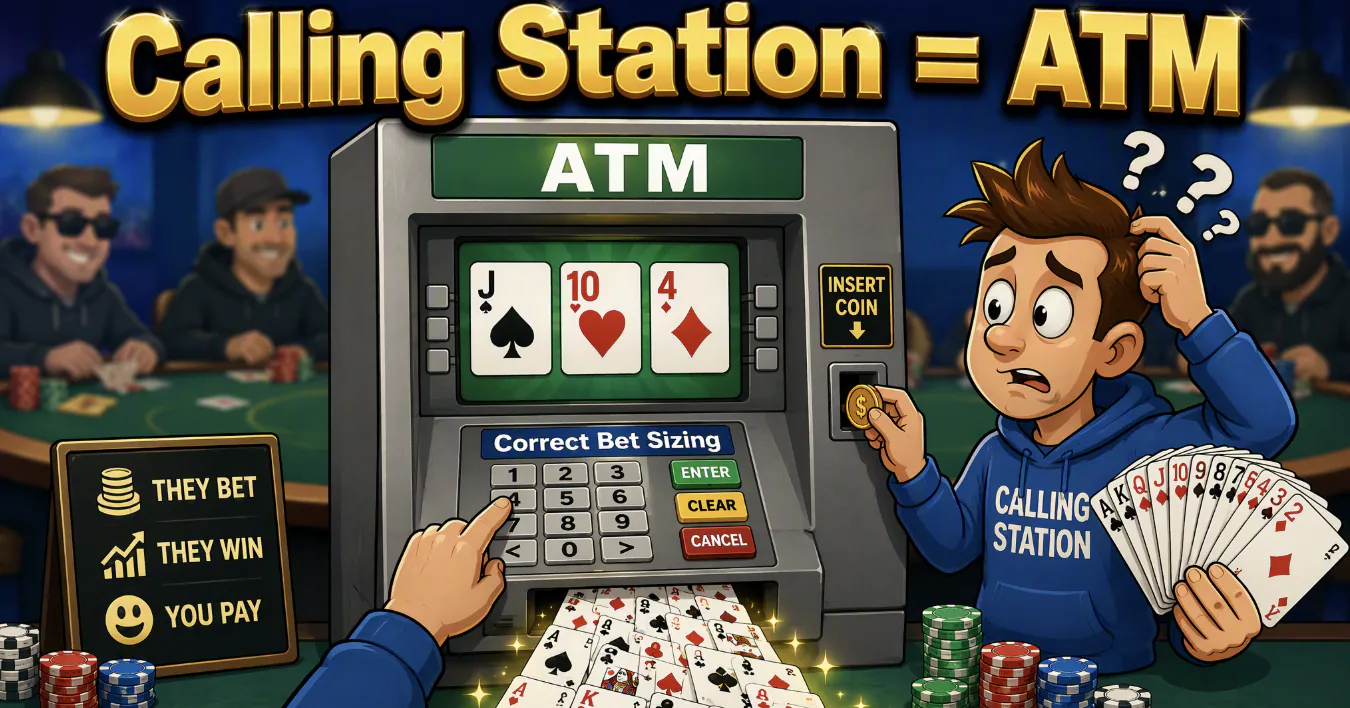
Fish / calling stations / maniacs: their favorite hobby is chasing to the river with junk. Don't be polite. Bet big and make them pay for their persistence.
When to Fold
On a dry board, the moment your opponent suddenly comes alive — a big raise over your bet, or an outright shove — the alarm should go off. TPTK against two pair or a set on a dry board is a dead spot: your chance of catching up is under 12%. Against a set especially, it's nearly a death sentence.
Fold decisively. Don't get sentimental.
3. Wet Boards: Your Edge Is Smaller Than You Think
What's a wet board? The kind full of holes — say A♠8♦7♠: flush draws, straight draws, maybe overcard draws too. On these boards your TPTK's real lead is quite thin, because any random draw your opponent holds carries serious equity.
Plan A: Bet a Proper Size (Recommended)
If you figure your opponent is on a flush or straight draw, bet half to two-thirds of the pot. That sizing is deliberate: the chance a flush or straight gets there on the turn is under one-third, so by charging more than half pot you make their call a mathematical loser.
This sizing has a side benefit too. If your opponent already has two pair or a set, he won't let you draw cheap — he'll usually make a big raise. Just like that, he's told you his real strength.
Plan B: The Hammer (Use With Caution)
Overbet or shove outright, and make the chasers pay the maximum price to see another card. This works in specific spots — say the opponent is a call-anything station and your stack is deep enough.
But honestly, this line comes with huge variance. You do squeeze extra value from the draws, yet you're also gluing yourself to the pot. If your opponent shows up with two pair or better, you're just donating.
Unless you know this opponent well, don't take the hammer to TPTK on a wet board.
When to Fold
Facing a shove on a wet board is the biggest headache in this spot. He might be protecting two pair or a set, or he might be semi-bluffing with a draw. How do you tell? It comes entirely down to how well you know this particular opponent.
If you haven't figured him out yet, or you just sat down, fold. On a wet board, TPTK simply isn't strong enough to call an all-in.
4. The Golden Rule: Don't Slowplay, Just Bet
TPTK is not a monster. It's a medium-strength made hand. Outside of rare exceptions — a bone-dry board against an opponent who bluffs at everything — TPTK is not a slowplay hand.
When you hold TPTK, your job is value betting. Checking to set a trap? That's handing out free cards and manufacturing your own bad beats.
Bet decisively. Hit, bet; miss, figure something else out. Don't complicate the simple stuff.
Five Sentences to Remember
When AK flops top pair top kicker, the plan is made preflop. Don't start improvising after the flop comes out.
On dry boards: ahead, take value; behind, fold fast. There is no middle ground. Don't agonize.
On wet boards, proper sizing is the steady road. The hammer is a high-risk play — use it sparingly.
TPTK is a thin-value hand; don't play it like aces. It isn't worth three streets of fire.
Don't slowplay. Bet first, think later.
AK isn't hard to play. What's hard is accepting that it's only one pair. Play it like AA and you'll lose big money; throw it away like trash and you'll win too little. Give it the right label: a decent medium-strength made hand. Collect the value that's yours, fold when it's time to fold.
Do that, and AK stops being the hand that costs you the most.