For years, readers have asked me the same question over and over: how do you beat loose-aggressive players? Someone asked again this week, so let's write the topic out properly.
Quick definition for anyone new: LAG means playing lots of hands before the flop and applying constant pressure with bets after it. Mention LAG and most people picture Tom "durrrr" Dwan. It's a flashy, seductive way to play, which is exactly why everyone asks about it.
But the style has a few little-known features you need to understand first.
Cold Water First: Most LAG Players Don't Actually Win
This is the most important point in the whole article.
In your regular cardroom, the biggest winner over the past few months probably happens to be a loose-aggressive player. You watch him win session after session and shake your head: "He plays every other hand and just keeps winning. What's the secret?"
Here's the thing. In that same room, the biggest loser over the past few months is probably also a loose-aggressive player, or at least a loose one.
The LAG style manufactures variance — huge wins and huge losses. Add a little luck and you string together a few big pots, producing what looks like a miracle heater. The moment you see that heater is exactly the moment you most want to learn LAG, and it's also the moment his luck happens to be on a massive upswing. What you don't see is the three-week stretch where he dusted off his stack every single night.
Add up every LAG player's results and you'll find almost all of them are underwater. The style can be profitable — but the style alone is nowhere near enough.
The Engine Isn't Preflop
The most visible part of LAG is what happens before the flop: lots of hands, even bad ones.
So people naturally conclude that preflop looseness is the key to the whole thing. You might think the core idea is "I could have any two cards," which makes 97o from middle position perfectly fine, because nobody can put you on a hand.
That's a fantasy.
All the magic happens after the flop. A genuinely winning LAG could play tight preflop and keep right on winning. A "tight" LAG is just as unreadable, because what opponents can't read was never the preflop range — it's the postflop play. A wide preflop range adds a thin layer of mystery, but thin is the operative word. It is not the core of the strategy.
Postflop: The Two Moves That Actually Make the Money
LAG poker isn't mysterious at all. It simply exploits the two mistakes opponents make most often after the flop:
First, folding too much — especially to medium-sized bets on the turn and river.
Second, calling too much — especially big river bets and all-ins.
Sound contradictory? They coexist just fine, and LAG players eat at both ends.
Move One: Medium Turn and River Bets to Harvest the Over-Folders
This works against anyone with firm theories about which hands are "worth" a call.
Example. The flop comes Q♥7♦3♥. The LAG bets, and his opponent calls. The turn is the 2♣. The LAG bets again, and the opponent folds T♥9♥ because he "only has a flush draw."
But the LAG could have literally anything here — K4, 65, whatever. The chance he's actually holding a "good hand" like Q+ is pretty low.
What he's exploiting is a psychological threshold: once many players' hands drop below a certain line, they fold unconditionally, no matter how big or small the bet is.
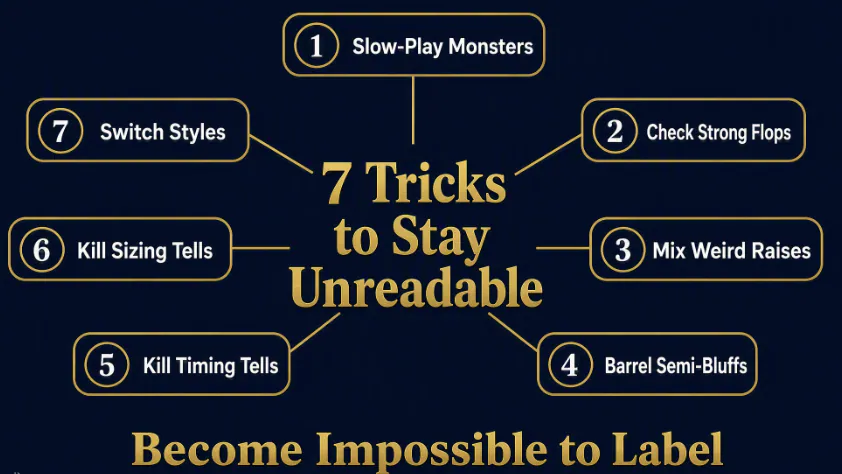
This is the LAG player's main profit engine. Which tells you something important: the strength of his preflop hand barely matters. The postflop play is what makes the preflop looseness work — not the other way around. It does take judgment to pick the right spots for these bets. Fire them every single time and the move stops working. Board texture, opponent tells, and every other available clue go into choosing the moment.
Move Two: Big Pots With Strong Hands to Harvest the Over-Callers
The second thing a LAG does postflop: when he actually has the goods, he builds a huge pot and waits to get paid. As a rule, the deeper the stacks — 200 big blinds or more — the more this style earns.
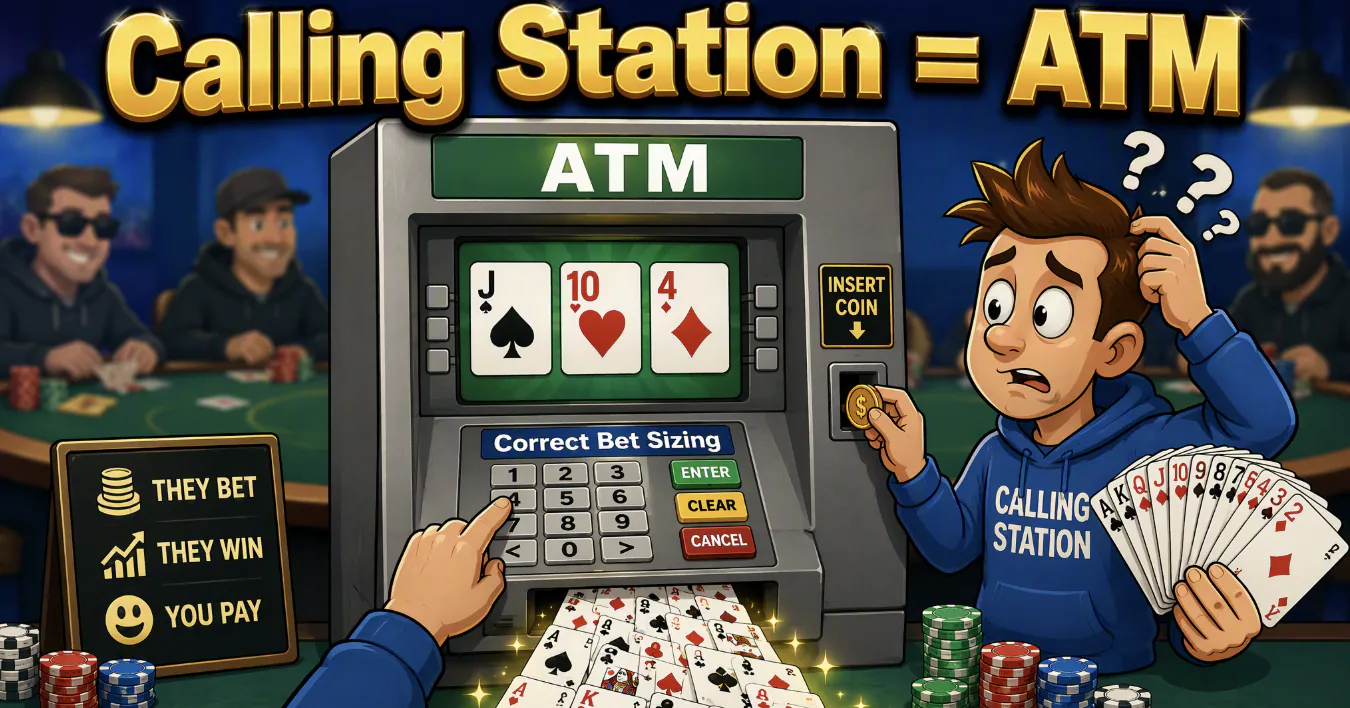
Over time, these players earn a reputation for loving massive pots. And a funny thing happens: against the LAG, many opponents fold all their weak hands on the turn, then call down on the river with mediocre hands they'd never play against anyone else. Against a traditional player, they'll fold top pair, top kicker to a 100-big-blind river bet without blinking. Against the LAG, they pay it off.
The LAG noticed this long ago. That's why he only uncorks the massive river bet when he's genuinely strong.
The Betting Tells Hidden in Their Sizing
That said, most LAG players aren't flexible enough with their bet sizing. Watch a successful one for a while and a pattern shows up: on average, his weak-hand bets run small, while his monster-hand bets are the biggest ones he makes.
There's the long-term secret of the style, hiding in plain sight: use smaller bets to steal pots you had no business winning, and occasionally use the maximum bet to bait opponents into paying you off.
Want to Learn LAG? Don't Get the Order Backwards
As I said, stealing pots with small postflop bets and occasionally getting paid on a huge one doesn't require a loose preflop strategy at all. You can play tight before the flop and win just fine. The edge that great LAGs have is the ability to add extra preflop hands and play them profitably.
So if you want to learn the style, don't touch your preflop game yet. Set it aside and put every ounce of attention into sharpening your postflop play: learn to steal pots with medium turn and river bets, and build an image that gets your biggest river bets paid off.
Once the postflop game is there, then start adding hands preflop. At that point, every extra hand you play really does make you extra money.
FAQ
Is loose-aggressive better than tight-aggressive?
Tight-aggressive is the foundation; loose-aggressive is the renovation. Adding preflop hands before your postflop game is ready just means losing faster.
How do you beat a LAG at your table?
Understand how he makes money and you know how to counter it: don't fold your draws to his medium pressure bets, and don't pay off his huge river bets without a real hand.
Do LAG players have betting patterns?
Most of them do. Small bets tend to mean weak hands, maximum bets tend to mean monsters. Watch for a while, read the tell, and turn it against them.
Conclusion
LAG isn't a preflop fashion show. It's postflop craftsmanship.
Next time the loose-aggressive player at your table stacks a few pots in a row, don't envy him, and don't imitate him yet either. Ask yourself one question first: have I actually learned the two postflop moves?
How to against LAG players can read: How to Beat LAG Players in Texas Hold'em: The "Two Bullets" Strategy That Sends Maniacs Home