In Texas Hold'em, a "nuts draw" refers to a draw that can develop into the absolute best possible hand. Chasing nuts draws is the core strategy for avoiding being outdrawn and maximizing profit. Here are the key techniques and real-hand examples.
I. Why Nuts Draws Are Critical
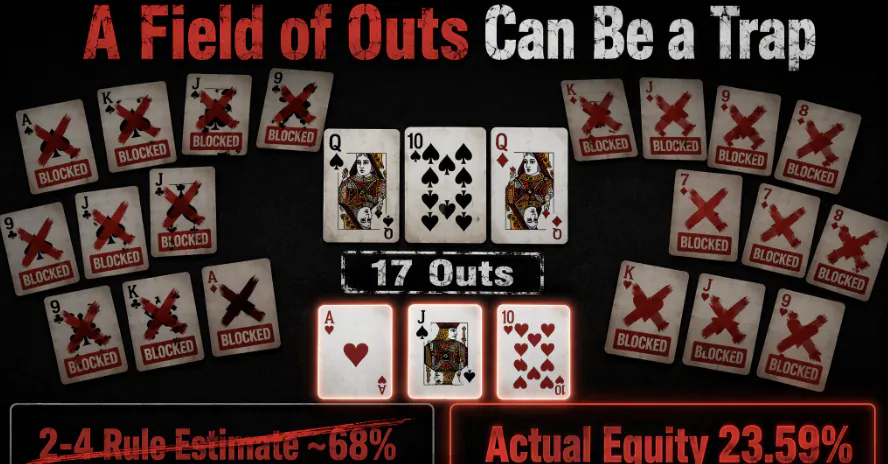
The Straight Draw Trap on a Flush Board
Committing significant chips with a straight draw on a board where a flush is possible is extremely dangerous — because flush cards eliminate roughly 25% of your straight outs.
Three common disastrous outcomes:
- You miss the straight entirely — chips wasted
- You hit the straight, but your opponent also makes a flush — your straight becomes the "second-best hand," costing you even more
- You hit the straight on the turn, but your opponent hits the flush on the river — you get drawn out on and lose a big pot
Rule: When facing aggressive opponents or in multi-way pots with non-nut draws, prioritize folding over calling.
II. The Exception: Non-Nut Draws with Precise Reads
Of course, rules have exceptions — when you can accurately narrow your opponent's range.
Example: A player raises pre-flop, and you know he only raises with big pairs (e.g., AA, KK). The flop gives you a bottom-end straight draw (e.g., 5-4 on a 3-2-A board).
You can comfortably chase here because:
- You're certain he doesn't have the top-end straight draw
- Your small straight draw is good enough in this specific situation
- His range is severely capped
Key Point: Without precise reads, only chase nut draws, or fold immediately. The ability to accurately read your opponent's hand is what separates winning players from losing ones.
III. Real-Hand Example: Slow-Playing a Nut Straight in Position
The following hand I played recently perfectly illustrates the art of reading opponents combined with positional advantage.
Hand Setup
| Position | Your Hand | Flop |
|---|---|---|
| Button (You) | 9♠ 6♠ | 8♥ 7♣ 5♦ |
An opponent leads out with a bet on the flop.
My Decision: Just Call
Two reasons:
- His bet indicates he hit a straight — I need to control the pot size and avoid building a big pot without sufficient information
- If a pair comes on the turn, I might steal the pot with a bet, representing a full house
- More importantly: if, as I suspected, he only had the second-nut straight, raising on the flop would reveal that I have the best hand, likely causing him to fold. But by just calling, and if he checks the turn, I can absolutely bet — he will have no idea what I'm holding. A straight? Second-nut straight? Two pair? Three of a kind?
- As it happened, he checked the turn. I bet the pot. He shoved all-in with his remaining stack. As I expected, he tabled 6♠ 4♠ (second-nut straight). I won the pot.
- By reading how he played his hand, I knew that raising the flop would make him fold. The call kept him in the hand and allowed me to extract maximum value.
IV. Key Takeaways Summary
| Principle | Explanation |
|---|---|
| Prioritize nut draws | Non-nut draws carry extreme risk, especially on flush or paired boards |
| Precise reads allow exceptions | When you can confirm your opponent's range is capped, non-nut draws become playable |
| Position is information | Acting last lets you adjust based on your opponent's actions |
| Slow-playing sometimes beats raising | Raising can scare away second-best hands; calling keeps them in the pot |
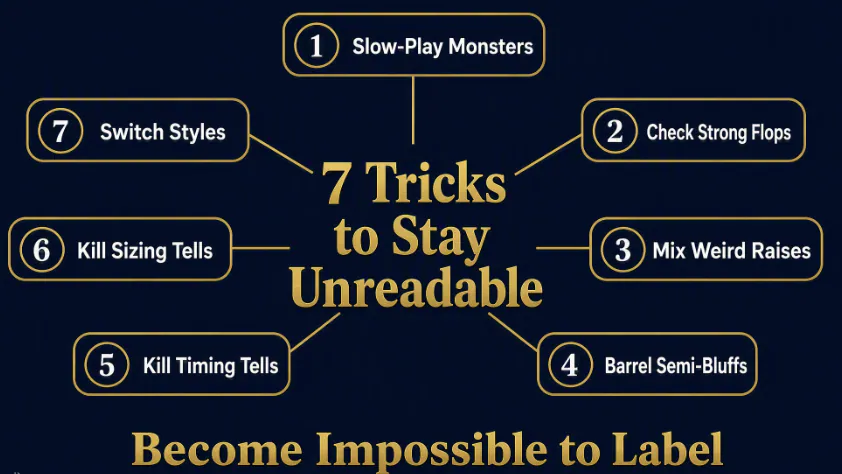
| Range diversity is a weapon | Make it impossible for opponents to put you on a specific hand, forcing them into mistakes |
Final Advice: By observing your opponents' playing patterns and anticipating their reactions in specific situations, you can choose to call rather than raise at the right moments — not because your hand is weak, but because raising would cause them to make the correct fold.