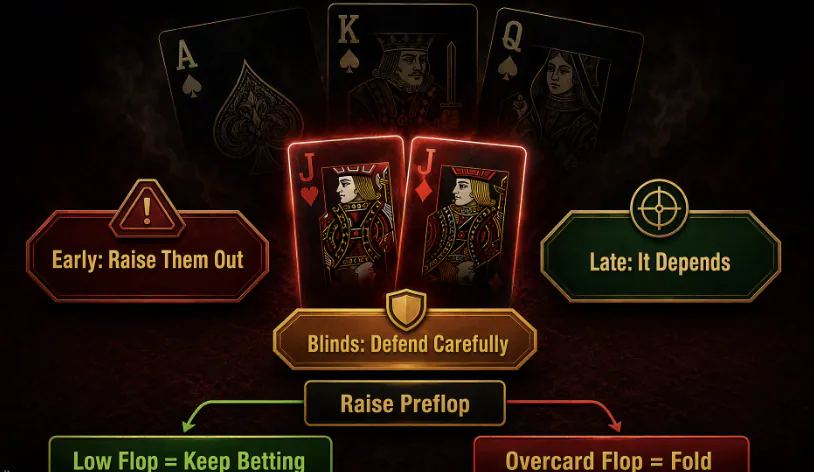
JJ's weakness is overcards. Twelve cards in the deck can turn you from an overpair into second-best, while you have exactly 2 outs to a set. So the whole plan revolves around one thing: raise preflop to thin the field, because the fewer opponents, the safer your jacks. When the flop brings overcards, back off. No attachment.
The Fourth-Best Starting Hand, or Just a Middling Pair?
Pocket jacks might be the most discussed, and most misplayed, hand in Texas Hold'em.
Call it strong? Any A, K, or Q on the flop instantly demotes it from "fourth-best starting hand" to "a middling pair." Call it weak? It's still the best pair in the deck after AA, KK, and QQ.
So how do you actually play JJ?
The answer isn't complicated: watch your position, thin the field, and don't get attached.
1. JJ's Core Weakness: Too Many Overcards
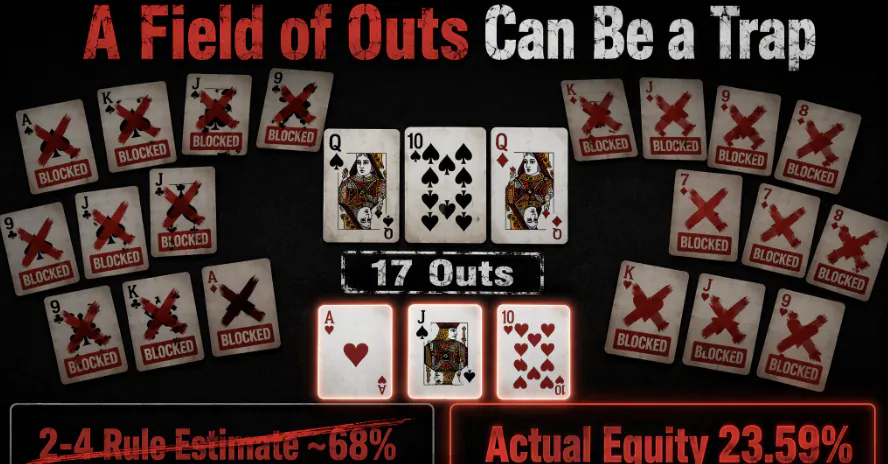
Do the math first. There are 12 cards in the deck that beat your JJ — four aces, four kings, four queens. Any one of them on the flop turns your overpair into a middle pair.
And your outs to a set of jacks? Exactly 2.
What does that mean? JJ needs protection. Before the flop, your job is to chase out the opponents who might be holding overcards. The more opponents stick around, the bigger the chance an overcard flops, and the more likely you get burned.
So the number one priority with JJ: reduce the number of opponents. Ideally only one or two players see the flop with you. Three is the limit. Four or more and you're buying a lottery ticket — one that pays out to somebody else.
2. Preflop: Position Is Your First Ruler
Early position (UTG, UTG+1, MP)
With JJ in early position, the standard move is a raise to 2-3BB.
Why raise? Not to get calls — to get folds. You want the Ax, KT, Q8 hands out. Individually they're nothing. Together, they make an overcard on the flop a near-certainty.
The purpose of the raise is simple: shrink the pot, shrink the crowd. Fewer opponents, safer jacks.
Late position (CO, BTN)
If nobody has raised, late position can raise aggressively too — even bigger, since your positional advantage makes postflop play easier.
But if someone has raised in front of you, things get complicated. Two things to weigh.
Pot odds: is calling expensive?
Set odds: you have roughly a 1-in-8 chance to flop a jack.
If the call costs more than 4BB, the price isn't great (a rough guideline — the real answer depends on stack depth). If it's cheap, call and take a look, pray for the set, and play carefully when you miss.
The key principle: raising preflop is the default, limping is the exception. JJ is not a slow-play hand. Slow-playing it just gives overcards a free entrance.
3. Postflop: Three Flops, Three Fates
Once the flop lands, JJ's fate is set.
Scenario one: all low cards (2-7-9, no A/K/Q)
Congratulations, your JJ is still an overpair and very likely ahead.
Your job now: bet, bet, and bet again. Chase out the ace-high and king-high hands. Don't let them hit for free on the turn.
If the board has a flush draw or straight draw, bet even bigger. Protect your hand.
Scenario two: one overcard flops (A-7-2, K-T-4, Q-9-3)
JJ is no longer an overpair. Time for a calm read.
Did someone bet? What kind of player is he? Did he really hit top pair, or is he bluffing?
If you're not sure, folding is an option. Don't play hero with jacks. If everyone checks to you, a probe bet is fine — but the moment someone fights back, shut it down.
Scenario three: two or more overcards flop (A-K-7, K-Q-2, A-Q-T)
JJ is basically done. Unless you have an extremely strong read on the opponent, check-fold is the steady line. Don't hang on just because "it's still a pair."
4. The Myth of Slow-Playing JJ
Some players figure JJ is a big pair, so they should slow-play it and set traps.
That idea is dangerous.
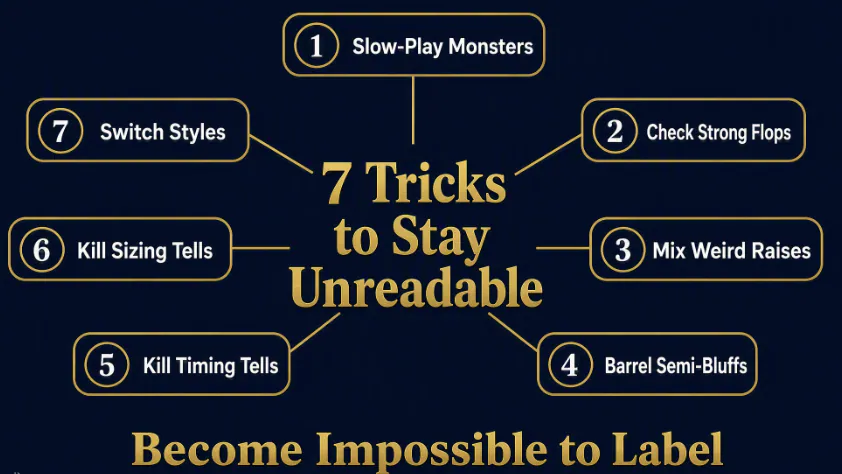
JJ is a big pair, yes, but it's the most fragile big pair. AA, KK, and QQ don't fear overcards. JJ does. Slow-playing it is an open invitation for ace-high and king-high hands to chase for free.
The right way to play JJ is "attack early, finish fast" — not "set a trap and wait for a whale."
Unless your read on the opponent is razor-sharp, never slow-play jacks.
5. A Few Practical Notes
Watch your opponents. Loose-aggressive or tight-passive? What hands have they been entering pots with? How do they play top pair? These answers shape your decisions. If you know a player only bets with top pair or better, and he bets on an overcard board, you can fold in peace.
Watch the board texture. Flush draw out there? Straight draw? If so, bet bigger. Don't give anyone a cheap chase.
Don't get too excited. JJ is a strong hand, not a monster. When an overcard flops, your jacks might be nothing but paper. Folding isn't embarrassing. Going broke is.
The Four-Line Summary
Raise preflop to thin the field — fewer opponents, safer jacks.
Position decides the action — raise from early, read the situation in late, never limp.
Overcard on the flop means caution — no attachment, fold when it's time.
Never slow-play JJ — it's not strong enough to deserve a trap.
JJ is a good hand, but it isn't AA. Understand what it is: an above-average pair that needs protection. See it clearly and you'll play it well. Overrate it and you'll lose big. Underrate it and you'll win too little. Find the balance point, and pocket jacks become a steady source of profit.