Small pocket pairs are usually easy to play after the flop. Hit a set and hammer it, miss and let it go. The real skill is in three spots: sets on dangerous boards, knowing when to seize the initiative and steal, and those rare moments when even a set has to hit the muck.
Monster or Easy Fold — Is It Really That Simple?
Playing small pocket pairs postflop is, most of the time, straightforward. You either flop a monster (a set) or you miss and fold without a second thought.
But there are exceptions. Small pairs occasionally drag you into genuinely tricky spots: a set on a dangerous board, or the creeping feeling that an opponent is trying to push you off the pot.
This article covers the whole playbook. Position, stack sizes, board texture, opponent tendencies — all of it matters.
The Small Pair That Missed: Don't Get Attached
You limped in preflop, or called a raise, and the flop missed you completely. Against almost any bet, fold. On an A-K-J rainbow flop, your pocket fours are almost never good, especially against more than one opponent.
Different story if you were the preflop raiser. On that same A-K-J rainbow flop — honestly, on almost any board — we recommend firing a continuation bet and trying to take it down right there. Your preflop raise is an asset. It lets you represent the big hands.
But if someone calls or raises you on the flop, slam on the brakes. You're almost certainly behind.
You Flopped a Set: Fast or Slow?
The dream outcome for a small pocket pair is flopping a set: your pair matches one card on the board, and your three of a kind is completely invisible to everyone else.
There are two ways to play a flopped set: fast and slow. Neither is automatically correct. It depends on the situation.
Fast-playing: If you're first to act on the flop, play it fast. This accomplishes three things. First, it protects your hand against backdoor flushes and straights. Second, it can induce a raise from a player holding top pair or an overpair. Third, it collects immediate value from ordinary hands — someone with second pair will call your bet just to see the turn.
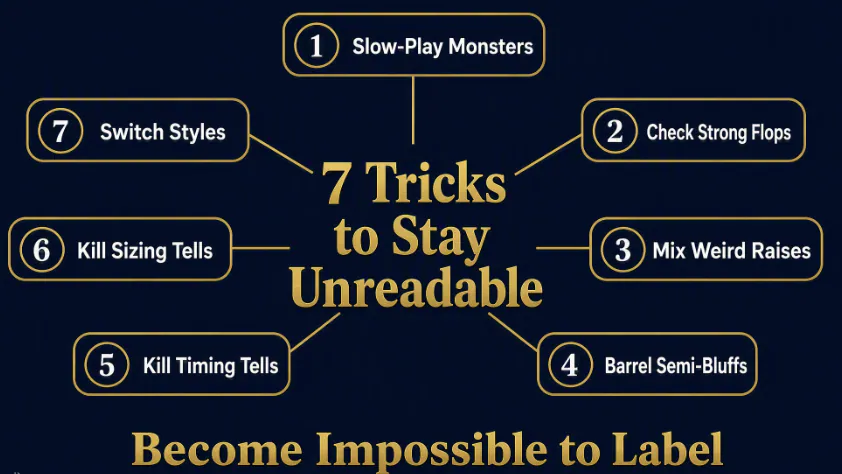
Slow-playing: If you're last to act on the flop, slow down — unless the board is genuinely dangerous. If someone bets into you, just call and let them fire again on the turn. If everyone checks to you, check behind and hope an opponent improves enough on the turn to start donating.
The exception: Hit a set on a dangerous board and forget slow-playing. Three to a flush or three connected cards on the flop? Play fast. Protect your hand from the draws.
Seizing the Initiative: Small Pairs Can Steal
Some spots are perfect for turning your small pair into a steal.
You're in position and called a preflop raise with a small pocket pair. The flop comes all low cards — say 2♦6♠7♣ and you're holding 44. There's a real chance you have the best hand, and this is a spot to attack.
Opponent bets into you? Raise, and try to steal the pot right now.
Opponent checks to you? Bet, and try to take it down immediately.
Checking behind is the bad option. You'd be giving a free card to two overcards, and they pair up on the turn more often than you'd like. Then you're the one in a miserable spot.
Folding a Set: Rare, But Necessary
It doesn't happen often, but it happens: you flop a set and you're still beaten.
Say you hold 77 and call a raise from an ultra-tight player. The flop comes A-K-7. Be very careful. Your set of sevens is strong, but a player that tight has AA and KK making up a big chunk of his range.
If he check-calls the flop and then fires a big bet on the turn or river, don't snap-call. Take your time and think it through honestly: is my set already beat?
There's no shame in folding a big hand when the read is right. Every big bet you save is part of your win rate.
The Quick Recap
Miss the flop, fold. Don't get emotionally attached to a small pair. The exception: as the preflop raiser, a continuation bet is fine — just retreat when you meet resistance.
Flop a set? Play it fast when you're first to act, slow when you're last, and always fast on dangerous boards.
Low flop, good position? Take the initiative and steal. Don't give overcards a free look at the turn.
Ultra-tight opponent suddenly betting big? Even a set can hit the muck. The big bets you don't lose count just as much as the ones you win.